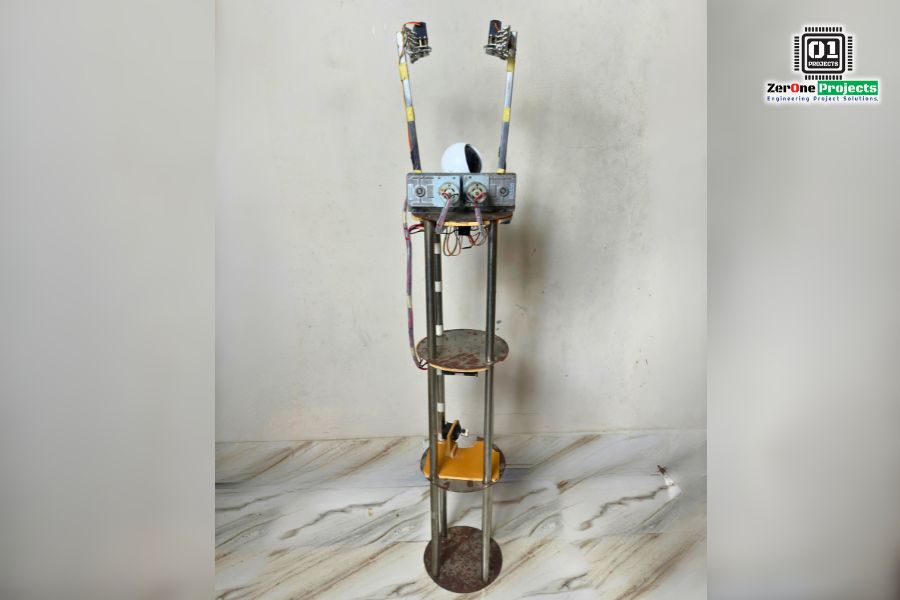
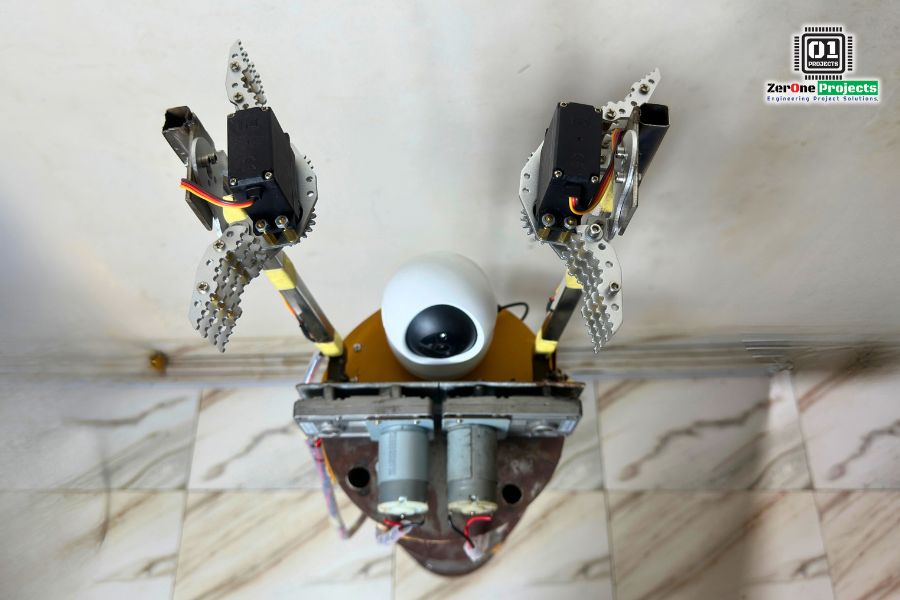
Borewell Child Rescue Robot.
Project Fee:Negotiable
Project Discount:0
Project Duration:30 Days
Borewell Child Rescue Robot.
The Borewell Child Rescue Robot is designed to assist rescue teams in monitoring and supporting the rescue of a child trapped inside a narrow, deep borewell. The system may use a camera, lighting, sensors, and a motorized mechanism to provide visual information and assist with controlled rescue operations. Depending on its design, the robot can help rescuers observe the child's condition and surroundings without immediately exposing rescue personnel to the hazards of entering the borewell. This project demonstrates the potential of robotics and remote monitoring in emergency rescue situations.
To develop a robot for borewell rescue assistance.
To provide real-time visual monitoring inside a borewell.
To help rescuers observe the trapped child's condition.
To support controlled movement in confined spaces.
To reduce risks during rescue operations.
To demonstrate robotics in emergency response applications.
Developing the project concept and preparing the block diagram and circuit diagram.
Collecting the required components and assembling the robotic structure for narrow borewell access.
Integrating the camera, LED lights, sensors, and microcontroller for visual monitoring and system control.
Connecting the motorized lifting mechanism and robotic gripper for controlled movement and rescue assistance.
Testing the prototype in a controlled environment to evaluate camera visibility, movement, control response, and lifting stability.
Research on borewell rescue robots describes designs using cameras, motorized mechanisms, controllers, and robotic arms or grippers to assist rescue operations.
The exact components depend on the actual prototype. The following are commonly used in published borewell rescue robot designs.
Arduino / ESP32 Microcontroller
Camera Module
LED Lights
DC Gear Motors
Motor Driver Module
Robotic Gripper or Rescue Arm
Ultrasonic Distance Sensor
Temperature or Gas Sensor (if used)
Rope, Pulley, and Lifting Mechanism
Power Supply
Monitor or Mobile Display
Connecting Wires and Supporting Frame
The robotic unit is carefully lowered into the borewell using a controlled rope or lifting mechanism.
The camera and LED lights provide visual information about the borewell interior and the trapped child's position.
Sensors, if installed, provide additional information such as distance and environmental conditions.
The controller processes operator commands to manage the robot's movement and gripper mechanism.
The rescue arm or specially designed support mechanism is positioned to assist in securing the child.
The lifting mechanism is operated carefully under the supervision of trained rescue personnel.
These steps describe a general design approach, not a guarantee that every prototype can safely lift a child.
Remote Visual Monitoring
Controlled Robotic Movement
Confined-Space Access
Rescue Operation Assistance
Reduced Rescuer Exposure
Camera-Based Observation
Sensor-Assisted Monitoring
Motorized Lifting Mechanism
Potentially Faster Assessment
Supports Emergency Response
The Borewell Child Rescue Robot demonstrates how robotics, camera monitoring, sensors, and motorized mechanisms can assist rescue teams in difficult borewell emergencies. Its primary purpose is to improve visibility, support controlled movement, and help rescuers assess the situation inside a narrow space. Further development and rigorous safety testing are essential before real-world deployment, particularly to ensure reliable lifting, secure child support, and uninterrupted monitoring.
Important safety note: This project should be treated as a prototype unless professionally validated. Actual borewell rescues require trained emergency responders, and an untested robot should never replace established rescue procedures.
👉 দেশের যে কোন ইঞ্জিনিয়ারিং ভার্সিটির প্রজেক্ট, প্রেজেন্টেশন, থিসিস পেপার, প্রজেক্ট বই, ইত্যাদি। সকল সমাধান পাবেন আমাদের কাছে।
🔰 ইঞ্জিনিয়ারিং ফাইনাল ইয়ার প্রজেক্টস এবং স্কুল-কলেজের ছাত্র ছাত্রীদের বিজ্ঞান মেলায় প্রতিযোগিতা করার জন্য, পছন্দের তালিকায় রাখতে পারেন আমাদের নিজিস্ব ডিজাইনের তৈরি এই ডেমো প্রজেক্ট গুলো। আমাদের রয়েছে সফলতার সাথে ১৫০০+ প্রজেক্ট সম্পন্ন করার অভিজ্ঞতা।
🔰 আপনার প্রজেক্টের আইডিয়া, সম্পূর্ণ প্রজেক্ট, প্রজেক্ট পেপার, পাওয়ার পয়েন্ট প্রেজেন্টেশন এবং আপনার প্রজেক্ট ভাইবা পর্যন্ত সকল ধরণের কারেকশন, সহযোগিতা করার জন্য আমাদের টিম আছে আপনার সাথে।
🔰 প্রতিনিয়ত আমরা আপনাদের জন্য বেস্ট সার্ভিস আর আপনাদের চাহিদা অনুযায়ী প্রজেক্ট তৈরি করে আপনাদের হাতে পৌঁছে দেওয়ার জন্য করে যাচ্ছি অক্লান্ত পরিশ্রম। আপনাদের রেসপন্সে আমরা অভিভূত।
𝐂𝐨𝐧𝐭𝐚𝐜𝐭 𝐃𝐞𝐭𝐚𝐢𝐥𝐬:
📞 01894-801150, 01886-180101
📧Email: projects.zeronebd@gmail.com
🌐Web: https://www.projects.zeronebd.com
YouTube Channel: https://www.youtube.com/c/ZerOneProjects
🏠অফিস:
প্লট-০৩, রোড -০৪, সেকশন ৬/ক
মিরপুর-২ (মিরপুর শের-ই-বাংলা স্টেডিয়ামের ৪নং গেটের বিপরীতে),
ঢাকা-১২১৬
Copyright ©2023 ZerOne IT Limited. All Rights Reserved.